
This blog post is a part of a series that considers the developments, challenges, and possibilities of solar technologies.
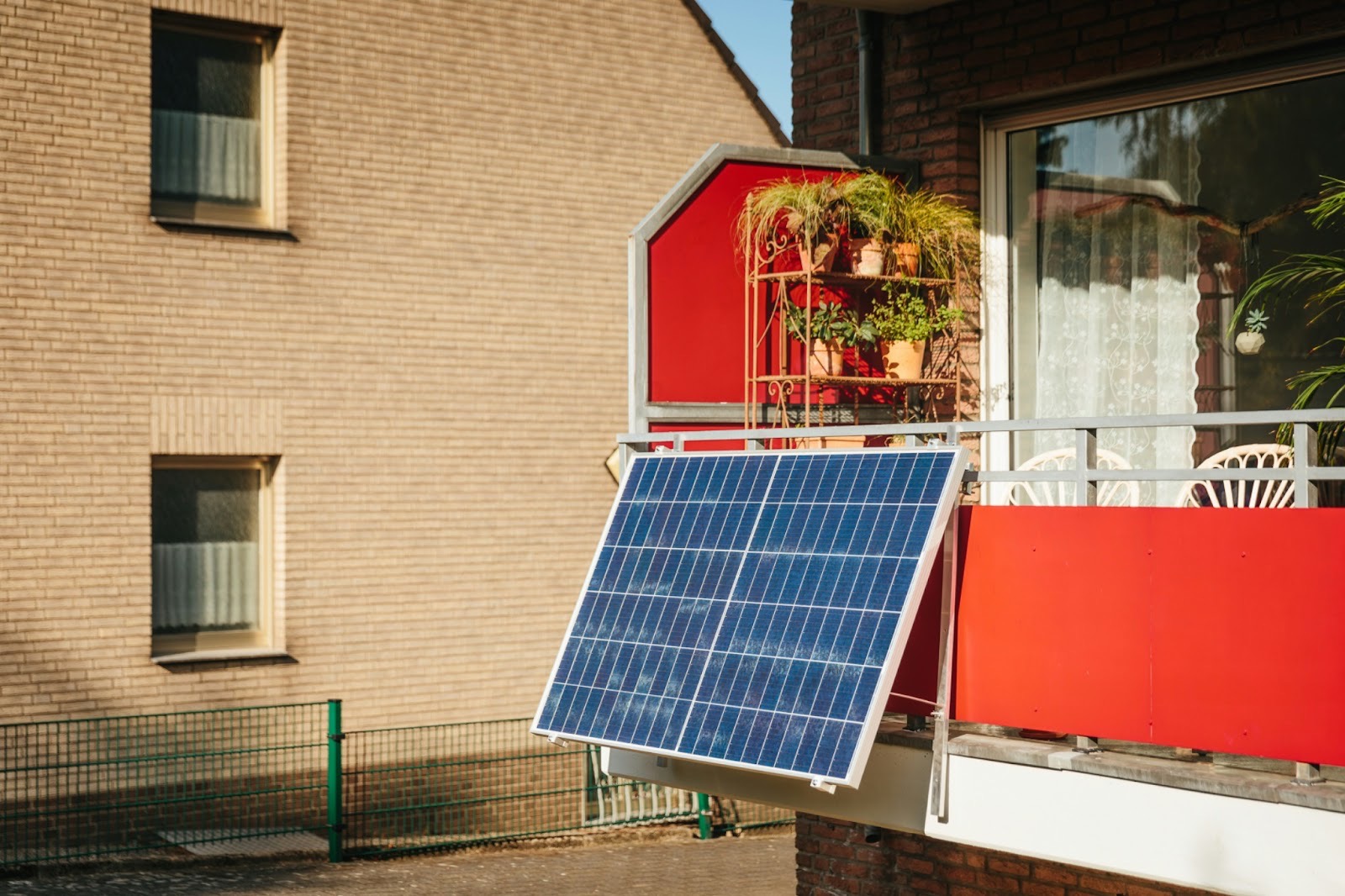
Power for the People: What Does It Take To Get Balcony Solar in the U.S.?
By Hosanna Rubio, Redwood Energy
Edits by Alistair Adams and Sean Armstrong
This past June of 2025, I spoke with Cora Stryker of Bright Saver, a Bay Area nonprofit that distributes “plug-in” solar arrays for balconies and backyards that don’t require a utility interconnection agreement. Our call couldn’t have been better timed. The previous weekend, my partner and I went on a hike through Tilden Regional Park. A portion of the park sits behind the Berkeley hills; the views match the steep home values: a fuzzy outline of the Coit Tower, the shimmery waters of the Bay, the Golden Gate Bridge. The homes look like stills out of Vertigo: two-and three-story single-family homes whose enormity is only magnified by the sunlight, which is plentiful and unobstructed. Many of these homes have one, two, or three solar panels fixed to the roof. This cluster of panels delights me as a clean energy enthusiast and makes me wonder as a perpetual apartment dweller.
During our descent into the flatlands, single-family homes and apartment buildings begin to cluster. On Telegraph, a yawning, soot-covered complex sits in the shadow of a 10-story luxury apartment complex. We haven’t even made it to downtown Oakland yet, where many units face the wall of another building or look towards shadowy courtyards.
How can we make solar work here?
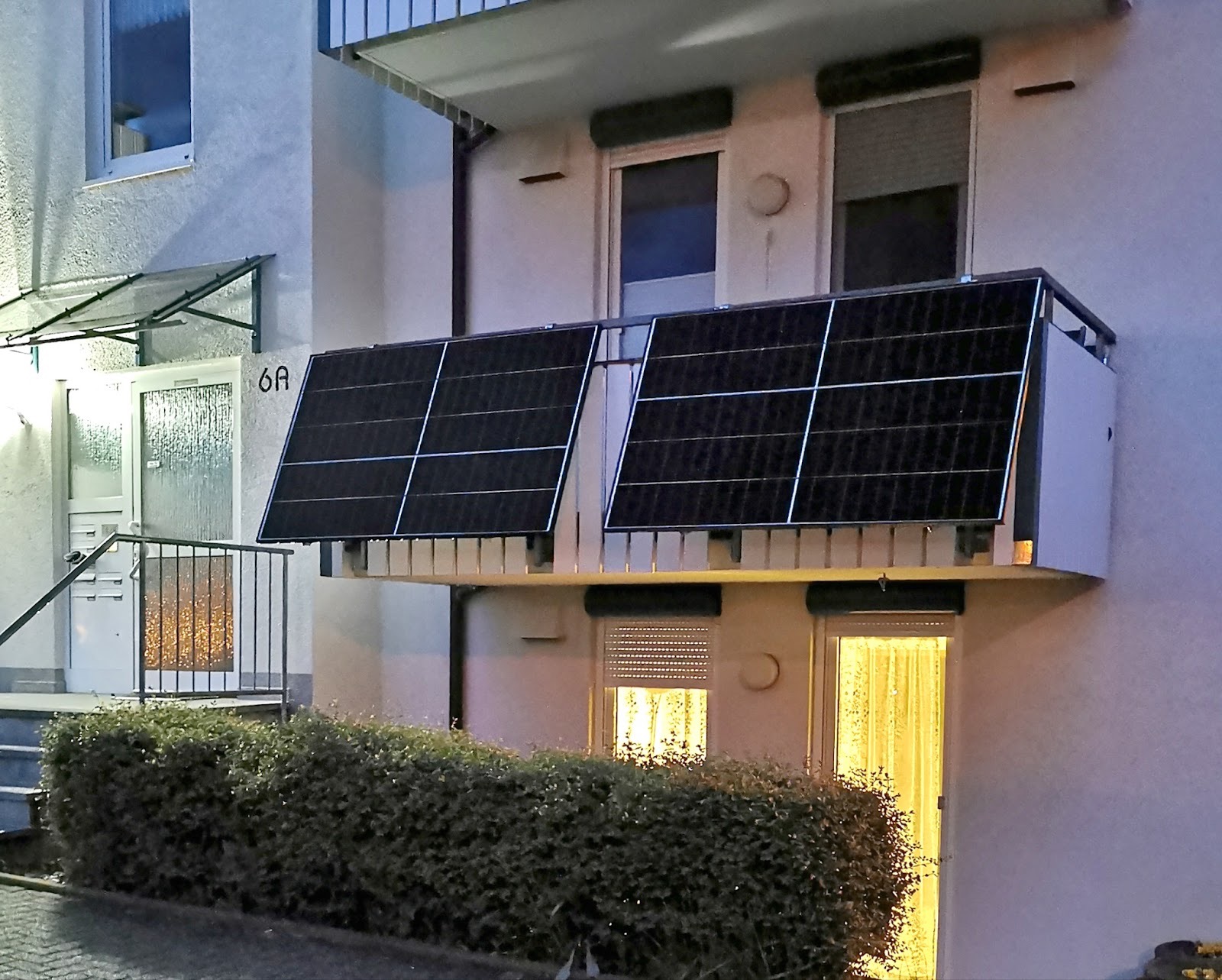
Cora and her German counterparts think they have an answer, but adapted to American regulations: plug-in solar. Plug-in solar works like conventional rooftop solar panels with some notable differences: plug-in panels are often capped at 800 watts (W) on a 2400W circuit, or 33% of the circuit’s capacity. German plug-in solar arrays are also capped at 800W, but European circuits are larger--3860W rather than 2400W in the U.S. 800W is 22% of European circuit capacity, and 33% of a U.S. circuit’s capacity. Remember this when you wonder at the technical details to come below.
These plug-in solar arrays can be situated in a backyard or fixed to a balcony, or suction-cupped to a window, and as the name suggests, they can be plugged into a standard 20-amp, 120-volt (V) outlet. Most importantly, they don’t require users to get landlord permission or utility permission, which are almost impossible barriers for apartment residents who would like to reap the benefits of clean energy and a lower utility bill.
While the concept of plug-in solar might sound like groundbreaking technology in the states, Europe, and Germany in particular have long championed plug-in. In an effort to divest from Russian energy following Russia’s invasion of Ukraine in 2022, a grassroots movement of plug-in solar users pressured regulators to adopt the technology. Now, Germany boasts over 4 million plug-in users, a number that rivals the energy produced from two or three conventional power plants3.
U.S. advocates of plug-in solar are desperate to match, if not exceed, Germany’s numbers - but not without addressing concerns about the safety and logistics of adoption. In a collaboration between Lawrence Berkeley Labs and plug-in leader, GismoPower, researchers collected concerns from twelve major stakeholders regarding barriers to plug-in adoption. I’ll address a few here: touch-safe plugs, breaker masking, and utility interconnections.
Before getting into it, while writing this section, I spoke to one of the authors of this research paper. They shared that many of the technical barriers are now irrelevant, and proposed solutions will eventually be published in an outline of investigations from Underwriters Laboratories (UL). I chose to still include these technical barriers for two reasons. First, I believe it is important to track and reiterate challenges to adoption – plug-in solar has yet to become a global phenomenon, and it is likely that other building scientists will name these challenges before uncovering solutions. Lastly, as a self-proclaimed bibliophile, I was frustrated by the lack of books on solar technologies; however, solar technologies are evolving rapidly. The solutions we identify for this version of plug-in solar may not be adequate for future versions or iterations of the technology.
Touch-safe plugs reduce the chance of shock. Unlike the circular, “recessed” Shucko 220V outlets in Europe, U.S. outlets or NEM 5-15 receptacles aren’t as shock-resistant - if a plug is partially inserted, the exposed and energized prongs can become a safety issue.4 In the case of plug-in solar, the prongs can remain energized even when they’re not plugged into an outlet. Researchers suggest defining a time period, likely slimmer than the standard 2 seconds, after decoupling, that would include an inverter shut-off.5 Secondly, homeowners can consider replacing NEM 5-15 receptacles with “a sheathed and touch-safe design for the inverter plug and receptacle interface” (See Figure 1).6 Either of these solutions lowers the risk of shock or injury related to exposed energized prongs.

Plug-in panels work by backfeeding solar-generated electricity into an outlet. Breaker masking occurs when backfeeding runs on a non-dedicated circuit, “where the current on a circuit can exceed the rating of the circuit’s breaker.”8 I had a difficult time understanding the structural triggers of breaker masking, so I connected with building engineer Alistair Adams to make sense of this technical conundrum. A circuit breaker protects electrical wiring from overheating or degradation, reducing the risk of fire. Normally, a 20-amp breaker will trip, or turn off, when two 14-amp electrical items are running — the addition of a plug-in panel can complicate this. If a plug-in panel and battery are placed at the end of a 20-amp circuit, two 14-amp electrical items can safely run due to panel generated electricity. However, if the panel is placed elsewhere, the circuit breaker is unable to trip any portion of the circuit that exceeds 20 amps, thus increasing the risk of wire degradation or fire.9
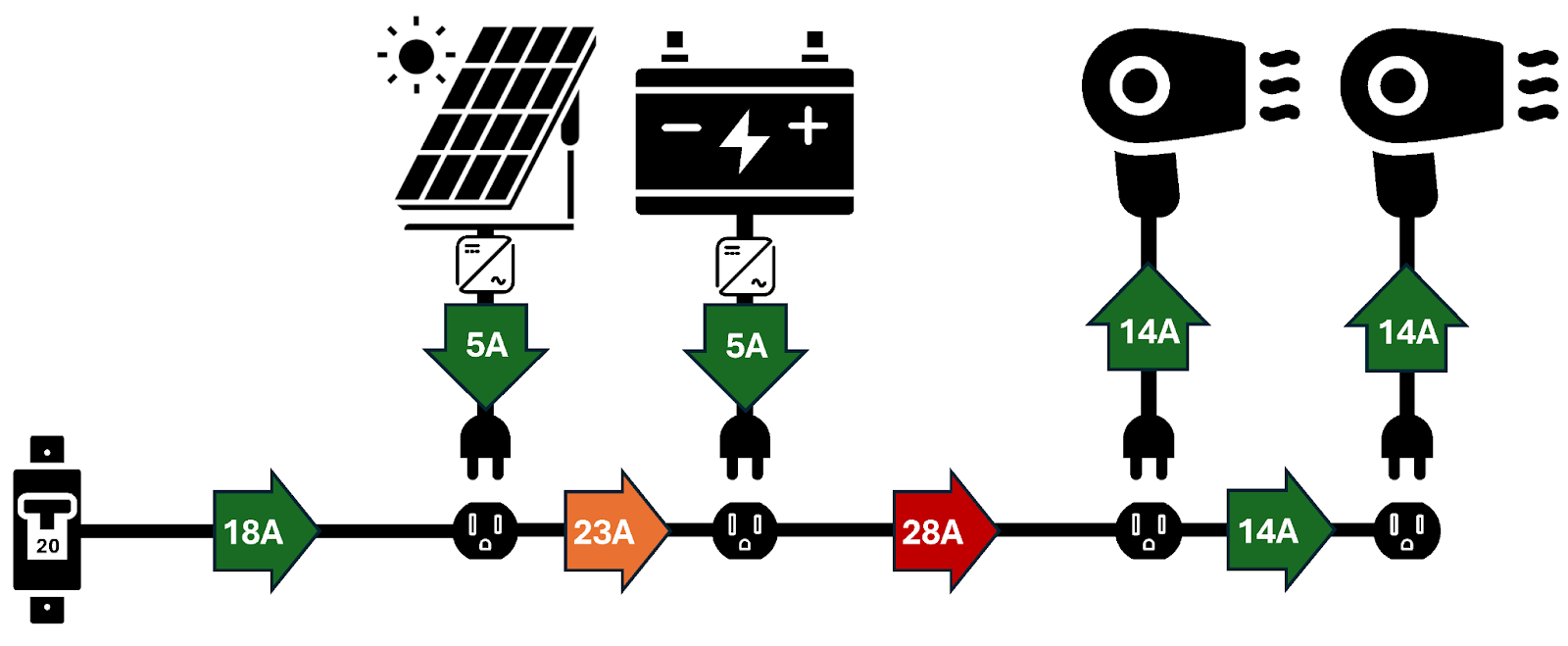
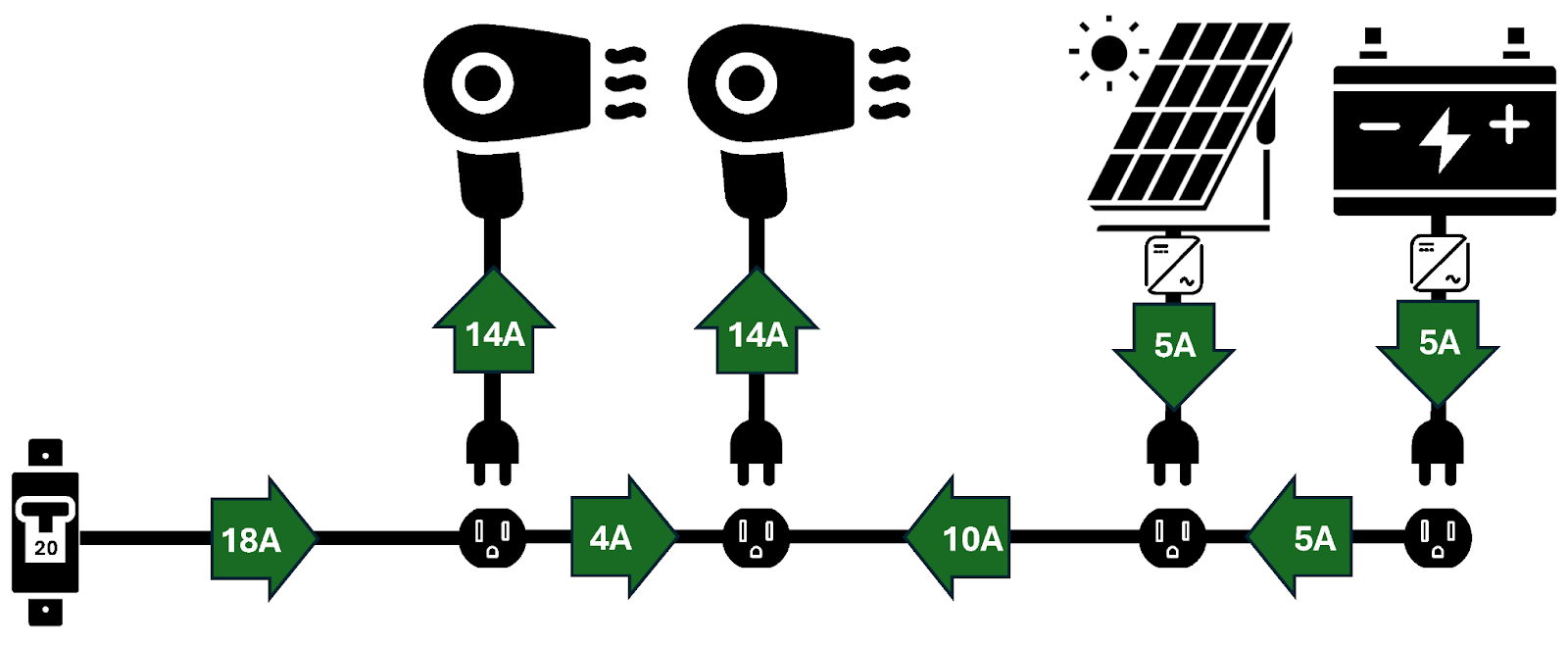
To solve the issue of wire degradation, some researchers suggest installing a dedicated circuit for plug-in panels, or strategically plugging in panels at the end of an existing circuit path; while great options for technically inclined solar adopters, they may create more barriers to adoption for laymen. Smart meters and improved utility interconnection agreements, however, may be more promising solutions.
Smart meters can be installed in the circuit breaker to ensure that the current being used by the plug-in panel is always below the circuit rating. Smart meters need to be installed by a licensed electrician. This option might be more feasible for homeowners and renters with amenable property managers. Multi-family dwellers may not be able to afford an electrician to install a smart meter, and depending on their lease agreement, they may be barred from modifying the circuit breaker altogether.
The second path forward is seemingly the simplest but requires policy change, an infamously slow process in the United States - utility interconnection. Most utilities in the U.S. require notice of changes to energy load or the addition of a distributed energy resource (DER) – researchers note that while enforcement is rarely carried out, there is still risk of service cuts due to noncompliance or being charged for energy exported back to the grid.12 Interviewees cited in the research article articulated several solutions to utility interconnection: zero export, device registration, state legislation, and interstate regulation.13
Building scientists, Eric Morrill, cited Italy’s system for plug-in panel adopters: an interested solar adopter notifies their utility of a plug-in panel install, the utility acknowledges this install, and electricity that backfeeds into the grid can be repurposed by the utility. The solar adopter gets clean energy and a lower utility bill, and the utility gets free clean energy from customers.14
Many of these solutions have successful use cases. I just wrapped up Italy’s model that resolves the need for zero export. In Germany, the utility partnered with local governments to distribute plug-in panel permits or device registration. Last March, Utah passed HB 340, legislation that allows “small portable solar generation technology,” like plug-in solar, to bypass interconnection agreements with a utility. 15 During BrightSaver’s May 2025 webinar, “Democratizing Solar,” plug-in leader Christian Ofenheusle credited the millions of Germans who had self-installed balcony solar before a formal framework was established, for increasing pressure on the government and the VDE to officially recognize plug-in technology. Grassroots plug-in solar adoption paired with changes to state legislation to accommodate plug-in solar could push the U.S. Federal Energy Regulatory Committee to create pathways for multi-state utilities to better integrate and harness energy from plug-in technologies.16
According to a recent Canary Media article, plug-in solar company GismoPower has partnered with UL to launch a standard for consumer use -- this could take years to develop.17 Even still, advocates of plug-in aren’t sitting this one out in the hopes of a national code or standard. BrightSaver technical advisor, Dr. Daniel Gerber, explained how advocates are moving ahead, “Technically, there is a need for a special bidirectional GFCI outlet as per UL 3700, which doesn't exist yet. So, no plug-in power devices are currently UL3700 listed. As it currently stands, it is impossible to get one's product listed because it requires a change to UL943 (bidirectional GFCIs) that will not be baked in until the end of 2026.” In the meantime, some plug-in solar companies are citing UL 1741. Dr. Gerber notes that “ UL1741 is basically a component-level standard for inverters, whereas UL3700 is a system-level standard for plug-in power systems.”18
In an article published in May, Canary Media covered New Hampshire’s efforts to pass similar legislation to advance plug-in solar adoption.19 In South Dakota, plug-in solar leader GismoPower has successfully launched plug-in solar via an interconnection agreement with Lacreek Electric.20
During my chat with Cora, she emphasized that as a nonprofit, BrightSaver doesn’t just sell plug-in panels; they convene stakeholders and advocate for large-scale adoption of plug-in solar. In the weeks leading up to our call, Cora had talked to political figures outside of California and a solar advocate in Puerto Rico. In the weeks following, BrightSaver had launched two hour-long informational webinars featuring Utah Representative Raymond Ward and plug-in solar champion Christian Ofenheusle of Germany.
While Bright Saver’s advocacy is far-reaching, the nonprofit offers plug-in solar options to Bay Area residents. Up until recently, they sold one product: the “Backyard 800,” two 400 W solar panels that, unlike rooftop solar, “require access to a yard, deck or patio, and an outdoor electrical outlet on a dedicated circuit.”21
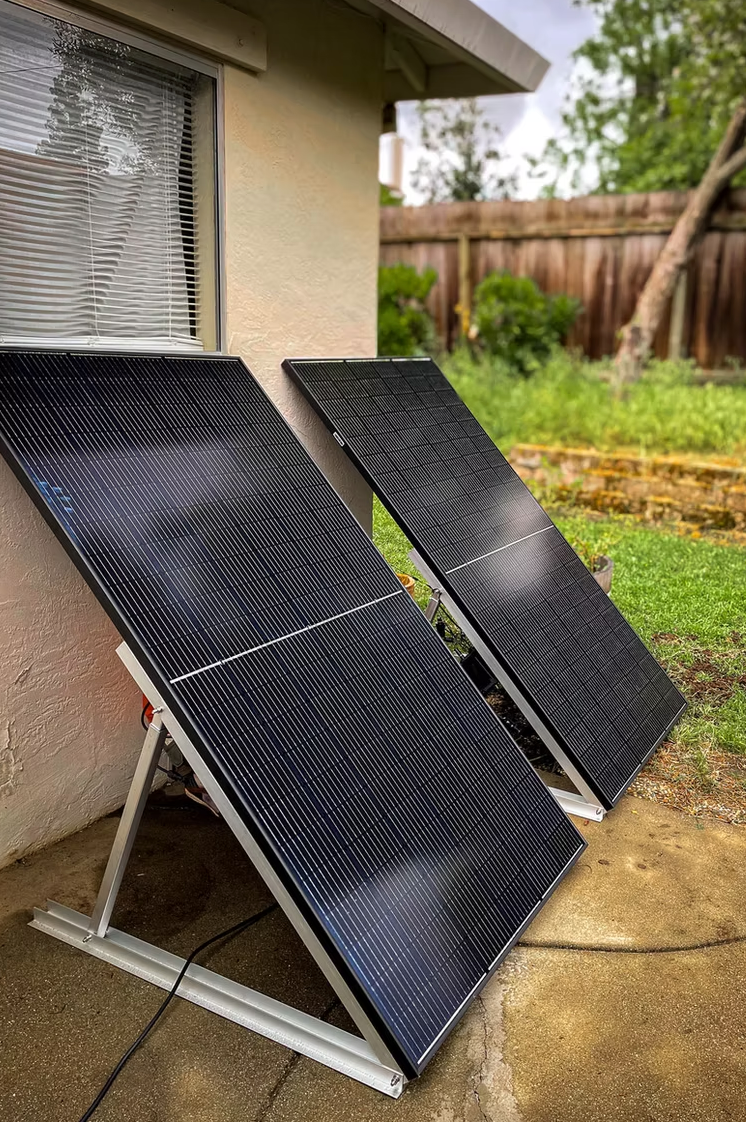
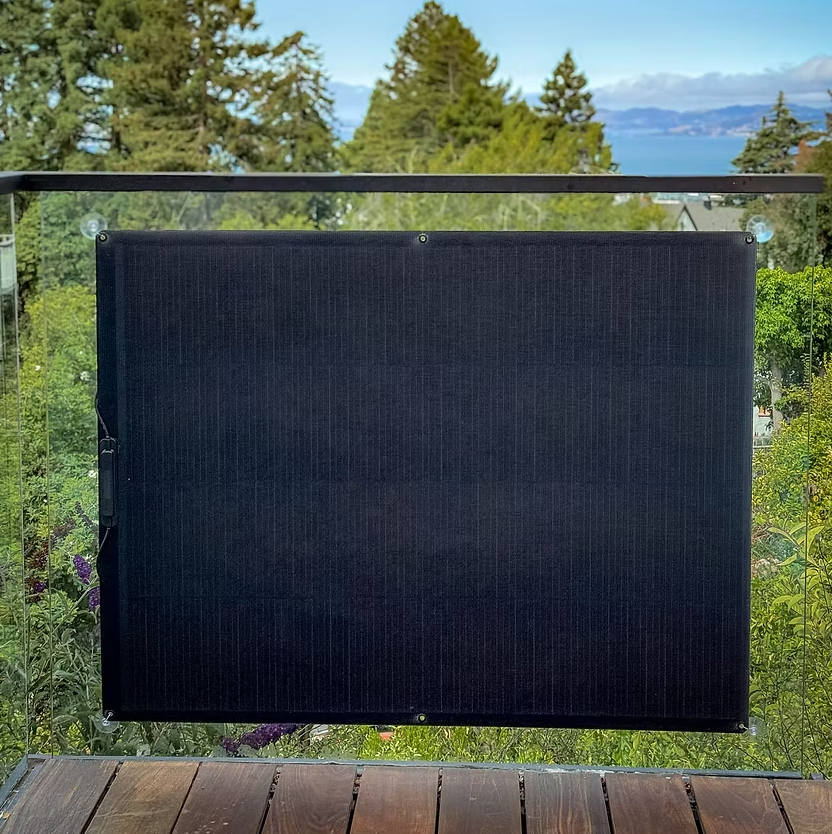
I asked Cora how BrightSaver planned to address obstacles to solar adoption in high-density neighborhoods like downtown Oakland. She signaled the rollout of a new product – a flexible 200 W panel that can be suction-cupped to a window (see image 4). While the wattage is much lower than the Backyard 800, BrightSaver claims that these panels can still offset the energy used to charge a laptop, phone, or wifi router. The Backyard 800 and the flex panel signal innovations in solar that solicit renters in multifamily homes.
The success of clean energy, particularly plug-in solar, relies on being able to supply the market. This means we need more BrightSavers and Gismos funneling plug-in solar options to consumers, ultimately driving down the costs to adopt – data released by Solar Energy Industry Associations (SEIA) proves as much. SEIA observed a substantial increase in PV installations between 2019 and 2024. In the first quarter of 2025, the SEIA saw the largest increase of solar adoptions in Texas. While these numbers look promising, they should be paired with fairly stagnant “soft costs” (permits, labor, utility interconnection) associated with rooftop solar installations.24 Plug-in solar might be the most cost-effective option for prospective solar adopters; this is especially the case for apartment dwellers who are least likely to benefit from rooftop solar.
Advocates of solar, rooftop and plug-in celebrate these technologies for their ability to reduce air pollution generated by thermal power plants, lower utility bills, and empower individuals to source their own energy. According to recent numbers from the National Apartment Association, renters, as a demographic, are growing faster than homeowners.25 And in 2022, the U.S. Energy Information Administration (EIA) found that even still, homeowners overrepresent the residential rooftop solar market in the U.S.26 Rooftop solar can’t be the only way towards a clean energy future.
Oakland’s flatlands have long been associated with middle and working-class communities.27 The cluster of multifamily homes is full of residents who, like the homeowners in the hills, ought to benefit from clean energy, lower utility bills, and the option to source their own energy.
[1] Yuma Solar, November 12, 2025[2] Triplec85, A balcony power plant on an apartment building, Wikipedia, May 5, 2025
[3] BrightSaver, “Democratizing Solar: From Berlin Balconies to Utah Backyards.” Webinar, Zoom, June 24, 2025
[4] Gerber et al., Barriers to Balcony Solar and Plug-in Distributed Energy Resources in the United States, 5
[5] Alistair Adams, phone conversation with engineer, November 6, 2025
[6] Gerber, Barriers to Balcony Solar, 6
[7] Gerber, Barriers to Balcony Solar, 6
[8] Gerber, Barriers to Balcony Solar, 7
[9] Alistair Adams, phone conversation with engineer, November 6, 2025
[10] Gerber, Barriers to Balcony Solar, 7
[11] Gerber, Barriers to Balcony Solar, 7
[12] Gerber, Barriers to Balcony Solar, 8
[13] Gerber, Barriers to Balcony Solar, 8
[14] Eric Morrill, phone call with building scientist, August 29, 2025
[15] Utah State Legislature, State. Solar Power Amendments, General sess., H.B. 340. https://le.utah.gov/~2025/bills/static/HB0340.htm
[16] BrightSaver, “Democratizing Solar: From Berlin Balconies to Utah Backyards.”
[17] Akielly Hu, “Balcony solar is all the rage in Germany. Why not in the U.S.?,” Canary Media, published May 1, 2025, https://www.canarymedia.com/articles/solar/balcony-panels-germany-utah
[18] Daniel Gerber, email message, February 19, 2026
[19] Sarah Shemkus, “Plug-in solar bills are in the works in New Hampshire and Vermont,” Canary Media,, published September 23, 2025, https://www.canarymedia.com/articles/solar/vermont-new-hampshire-plug-in-balcony-legislation
[20] “Utility Approval and Permission to Operate Plug-in Solar,” Gismo Power LLC, accessed June 23, 2025, https://gismopower.com/gismo-power
[21] BrightSaver, n.d.
[22] BrightSaver, n.d.
[23] BrightSaver, n.d.
[24] Solar Energy Industries Association, “Solar Market Insight Report,” SEIA, Wood Mackenzie Power and Renewables, published Dec 9, 2025, https://seia.org/research-resources/us-solar-market-insight/
[25] “Renter Population Outpacing Homeowners,” National Apartment Association, published August 28, 2024, https://naahq.org/news/renter-population-outpac,ing-homeowners
[26] Homes and buildings in the west and Northeast have the largest share of small-scale solar,” Energy Information Administration, published October 25, 2022, https://www.eia.gov/todayinenergy/detail.php?id=54379.
[27] Maria Poblet, “The Struggle for the Flatlands: How Oakland Can Fight Gentrification,” Convergence Magazine, published April 22, 2024, https://convergencemag.com/articles/struggle-for-the-flatlands/
Works Cited
Akielly Hu, “Balcony solar is all the rage in Germany. Why not in the U.S.?,” Canary Media, published May 1, 2025, https://www.canarymedia.com/articles/solar/balcony-panels-germany-utah
Bright Saver, "Backyard Plug-In Solar Panels With Battery." Accessed October 17, 2025, https://www.brightsaver.org/backyard-solar-with-battery
BrightSaver, “Democratizing Solar: From Berlin Balconies to Utah Backyards.” Webinar, Zoom, June 24, 2025.
Bright Saver, "Plug In Solar Panel Products." Digital Image, Accessed October 17, 2025, https://www.brightsaver.org/backyard-solar.
Gerber, Daniel L., Achim Ginsberg-Klemmt, Lyn Stoler, Jordan Shackelford, and Alan Meier. 2025. "Barriers to Balcony Solar and Plug-In Distributed Energy Resources in the United States" Energies 18, no. 8: 2132. https://doi.org/10.3390/en18082132
“Homes and buildings in the West and Northeast have the largest share of small-scale solar,” Energy Information Administration, published October 25, 2022, https://www.eia.gov/todayinenergy/detail.php?id=54379
Poblet, Maria. “The Struggle for the Flatlands: How Oakland Can Fight Gentrification,” Convergence Magazine, published April 22, 2024, https://convergencemag.com/articles/struggle-for-the-flatlands/
Renter Population Outpacing Homeowners,” National Apartment Association, published August 28, 2024, https://naahq.org/news/renter-population-outpacing-homeowners
Shemkus, Sarah. “Plug-in solar bills are in the works in New Hampshire and Vermont,” Canary Media, published September 23, 2025, https://www.canarymedia.com/articles/solar/vermont-new-hampshire-plug-in-balcony-legislation.
Solar Energy Industries Association, “Solar Market Insight Report,” SEIA, Wood Mackenzie Power and Renewables, published Dec 9, 2025, https://seia.org/research-resources/us-solar-market-insight/
Triplec85. "Sogenanntes Balkonkraftwerk, eine Mini-PV-Anlage, in Tauberbischofsheim 01." Digital image. Wikimedia Commons, May 5, 2023, https://commons.wikimedia.org/wiki/File:2023-05-05_Sogenanntes_Balkonkraftwerk,_eine_Mini-PV-Anlage,_in_Tauberbischofsheim_01.jpg
Utility Approval and Permission to Operate Plug-in Solar,” Gismo Power LLC, accessed June 23, 2025, https://gismopower.com/gismo-power
Utah State Legislature, State. Solar Power Amendments, General sess., H.B. 340. https://le.utah.gov/~2025/bills/static/HB0340.html
Yuma Solar, "Solar Panel on a Balcony with Plants." Digital image, Unsplash, November 12, 2025, https://unsplash.com/photos/solar-panel-on-a-balcony-with-plants-41zwj6kfGmM
Copyright © 2022 Redwood Energy. All Rights Reserved.


